A major Canadian study linked long-term exposure to a common form of airborne pollution to over 1,100 premature deaths per year in Toronto and Montreal. No jurisdiction in the world has set binding concentration limits on this form of pollution. Most alarmingly, routine government monitoring, including the daily AQHI readings that most people check, doesn’t include testing for this form of pollution.
They’re called ultrafine particles, or UFPs, and the reason most people haven’t heard of them isn’t that they’re harmless. It’s that the science is newer, and regulation is moving slowly.
For people in Hamilton, Stoney Creek, and the Niagara region, where heavy traffic corridors, steel production, and proximity to major airports are all part of the local geography, the issue is worth paying attention to.
What ultrafine particles are
Particulate matter is categorized by size. PM10 refers to particles 10 micrometres or smaller, that’s small enough to get into your lungs. PM2.5, which includes smoke, dust, and pollen, is 2.5 micrometres or smaller, and it’s what most air quality indexes and government monitoring programs track. Ultrafine particles are even smaller: 0.1 micrometres or less. That’s roughly a thousand times thinner than a strand of hair.
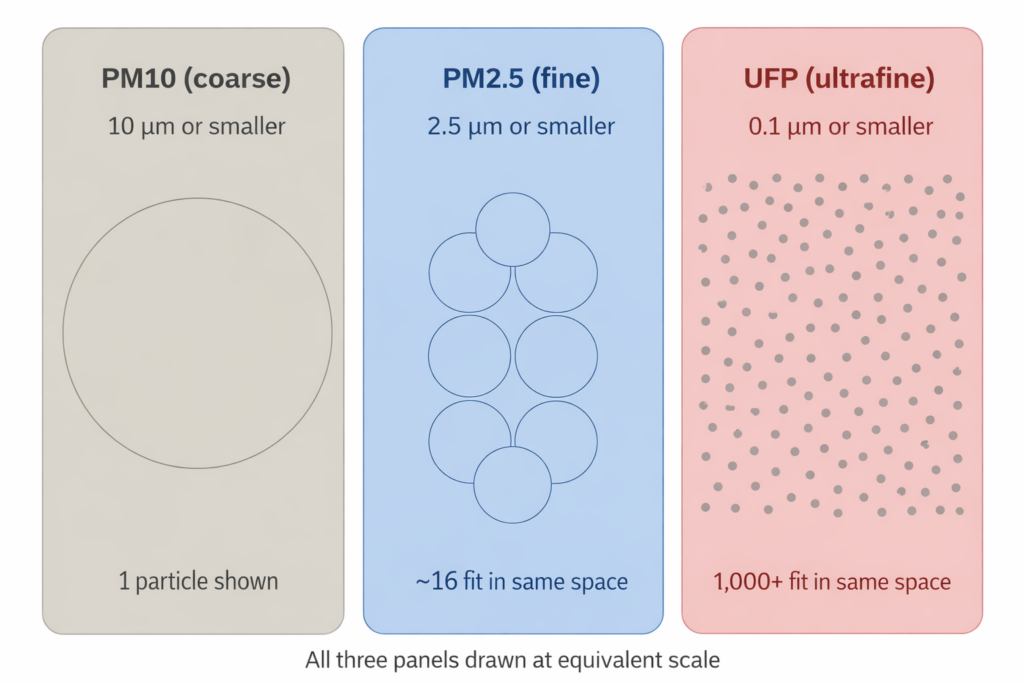
The size difference matters more than it might seem. PM2.5 is filtered to some degree by your nose and throat. UFPs are small enough to bypass those defences entirely, penetrate deep into lung tissue, and pass directly into the bloodstream. A 2020 study from the University of Illinois found that compared to fine particles, UFPs cause more pulmonary inflammation and are retained longer in the lung. Researchers have detected them in people’s brains. They’ve been linked to cardiovascular disease, certain cancers, diabetes, and developmental issues in children exposed in utero. A 2024 report by the Transport and Environment advocacy group estimated that thousands of cases of high blood pressure, diabetes, and dementia across Europe could be connected to UFPs emitted by aircraft alone.
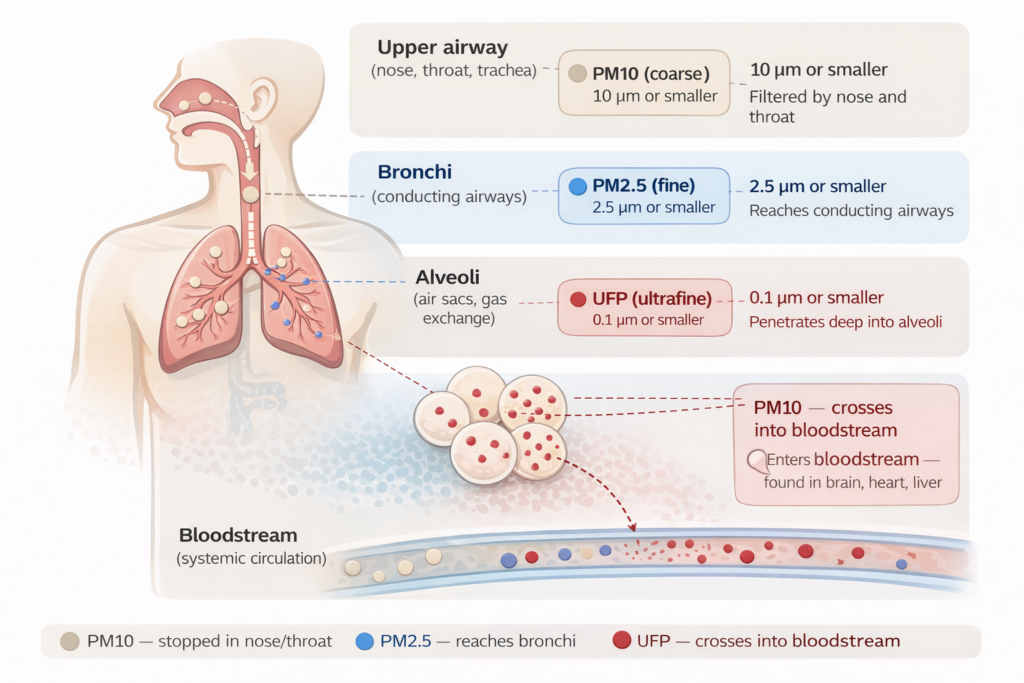
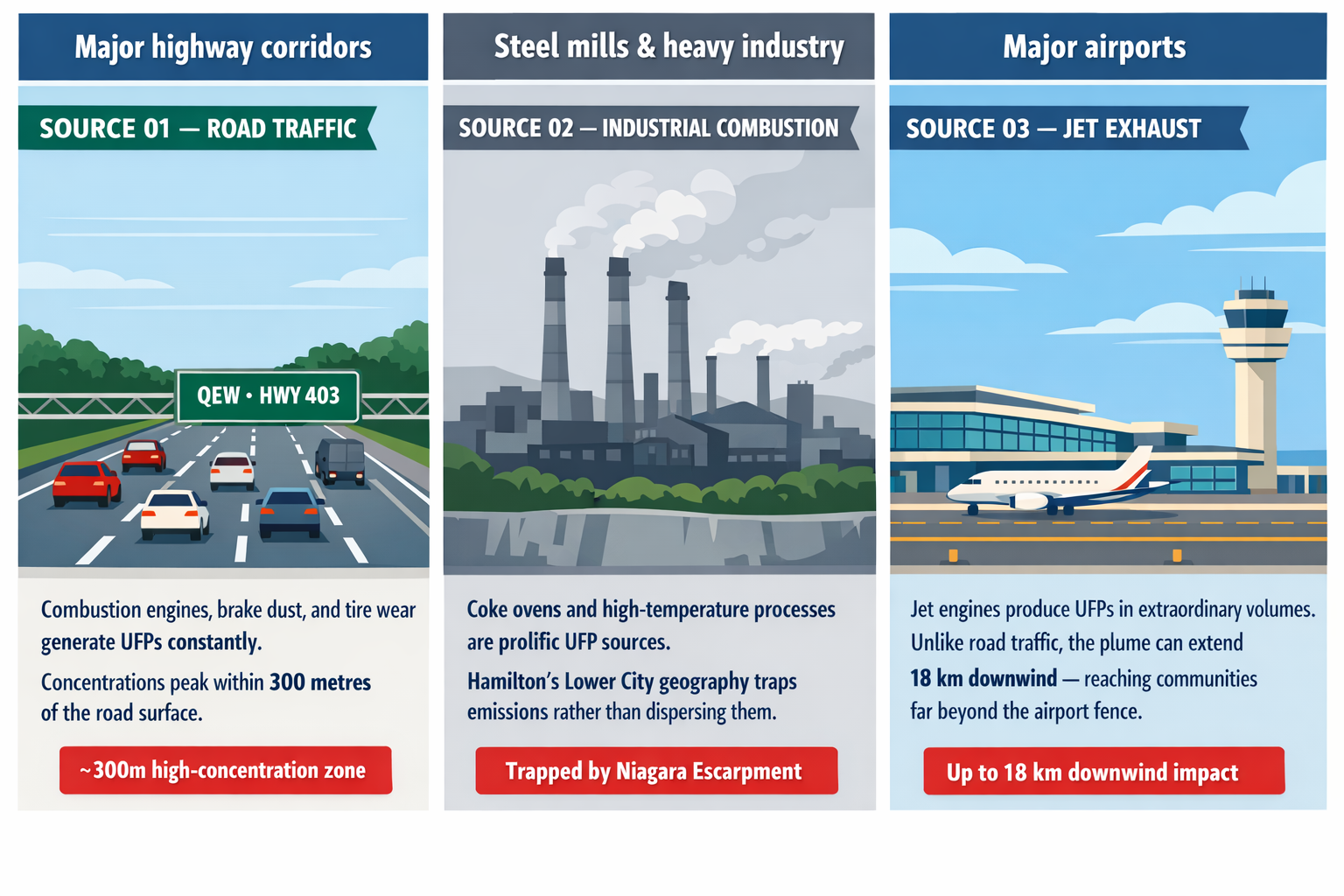
The primary sources are combustion-related: vehicle exhaust, tire and brake wear, industrial activity, aircraft engines. Unlike wildfire smoke, which is visible and intermittent, these sources are constant in urban environments.
What the research in Toronto found
In 2024, researchers at McGill University published the first study to examine UFPs and mortality in Canada. They tracked air pollution levels across neighbourhoods in Toronto and Montreal from 2001 to 2016, covering approximately 1.5 million adults. Using machine learning models combined with ground-level measurements, they mapped UFP concentrations at a fine spatial scale across both cities.
The findings, published in the American Journal of Respiratory and Critical Care Medicine, associated long-term UFP exposure with a 7.3 percent increase in mortality risk. The study estimated this contributed to over 1,100 premature deaths per year across Toronto and Montreal combined. Notably, UFP number concentrations were found to be independently associated with mortality even after controlling for PM2.5. This means UFPs shouldn’t be overlooked as just a component in general air pollution. They carry their own risk.
A separate 2025 study examined the social distribution of UFP exposure within Toronto, and found that concentrations were highest in areas near major roads, railways, airports, and densely populated corridors. Disadvantaged neighbourhoods showed higher median UFP concentrations than advantaged ones. The researchers described this as a double burden; vulnerability, and pollution.
Scott Weichenthal, the lead researcher of the study from McGill, told CBC News that despite decades of scientific awareness, no jurisdiction has introduced binding limits for UFPs. Health Canada, responding to the same coverage, acknowledged that air pollution contributes to an estimated 17,400 deaths annually in Canada. They also did not commit to UFP-specific regulation.
Where UFP concentrations are highest
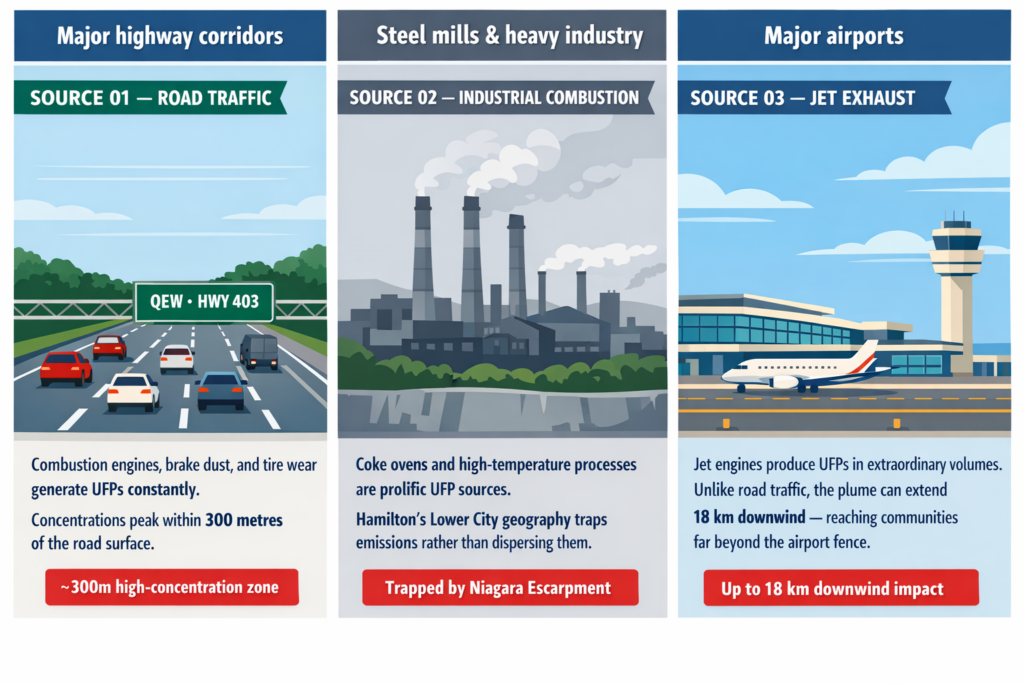
UFPs don’t distribute evenly. Unlike some pollutants that travel long distances and spread out, UFPs behave more like a gas. The concentrations drop sharply within 200 to 300 metres of a roadway, but within that range, levels can be extremely high. Diesel acceleration, older engines, and brake and tire wear are all significant contributors at street level.
The picture changes near airports. Aircraft engine exhaust generates UFPs in large volumes, and unlike road traffic, the impact extends far beyond the immediate perimeter. Studies near airports in Boston, Los Angeles, and Amsterdam have found elevated particle number concentrations 7 to 18 kilometres downwind of the runway, depending on wind direction and flight activity. Residents living under or near flight paths can experience indoor UFP levels nearly double the baseline during peak flight hours.
Industrial facilities, particularly those involving combustion, metal processing, or high-temperature manufacturing are another major source. Research conducted using Toronto’s land use data identified distance to Pearson Airport, proximity to highways, and bus route density as significant predictors of UFP concentration in a neighbourhood.
What this means for Hamilton and Niagara
Hamilton hasn’t been the subject of dedicated UFP monitoring to the same degree as Toronto or Montreal. But the conditions that drive high UFP concentrations in those cities are well-represented here.
Hamilton’s Lower City sits between the Niagara Escarpment and Lake Ontario, a geography that traps air rather than dispersing it. The city is home to one of Canada’s most significant steel-producing operations, and its industrial sector has historically operated with provincial emissions exemptions. A 2023 University of Toronto study on Hamilton’s air quality, as reported by CBC Hamilton, found that the
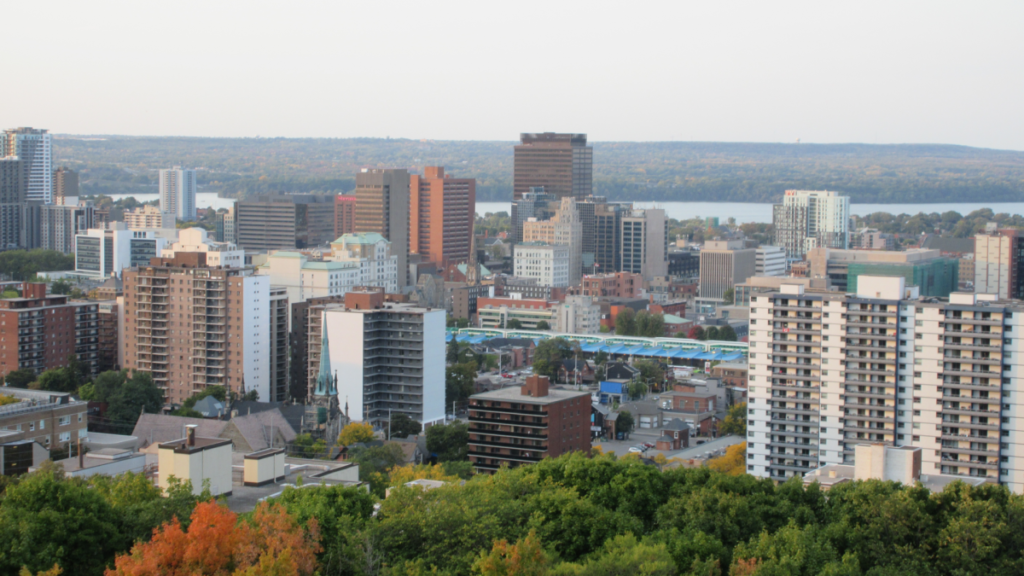
concentration of benzo[a]pyrene (a combustion byproduct emitted from steel mill coke ovens and vehicle engines) was high enough in urban industrial neighbourhoods that chronic exposure was roughly equivalent, in that researcher’s framing, to smoking one cigarette a day.
Traffic-related pollution is layered on top of that industrial baseline. The QEW, Highway 403, and the Red Hill Valley Parkway run through or adjacent to densely populated areas. Industrial transportation like trucks, freight, and logistics adds to combustion-related particle output throughout the corridor.
Hamilton also sits within the flight path influence of Hamilton’s John C. Munro Airport, and residents of the eastern suburbs and Stoney Creek can fall within the broader influence area of Toronto Pearson’s approach and departure patterns depending on wind direction. Niagara faces similar traffic corridor and industrial contributions, with the added dimension of cross-border freight activity at the Peace Bridge and Queenston-Lewiston crossings.
There are no alarm bells ringing though. PM2.5 levels in Hamilton have been shown to have improved significantly over the past two decades. But UFPs are not what gets measured, and the conditions that produce them are clearly present.
What people typically do and how much it helps
Most people’s instinct when thinking about indoor air quality is to open a window — and that’s fine when the issue is stuffiness or CO2 buildup. But for UFPs, opening windows near a busy road or flight path can actively worsen your exposure. UFPs infiltrate through building envelopes regardless, with indoor concentrations typically running at 50 to 70 percent of outdoor levels, but open windows accelerate that exchange significantly.
Houseplants come up often in these conversations, largely because of a 1989 NASA study showing certain plants could reduce VOCs in sealed chambers.

That finding has been significantly overstated. Real-world analyses found you’d need 10 to 1,000 plants per square metre of floor space to match a single mechanical air purifier. That equates to hundreds or thousands of plants for most homes. Plants offer real benefits (humidity regulation, modest VOC reduction, personal value), but they’re not a significant defence against particulate matter. We love them anyways!
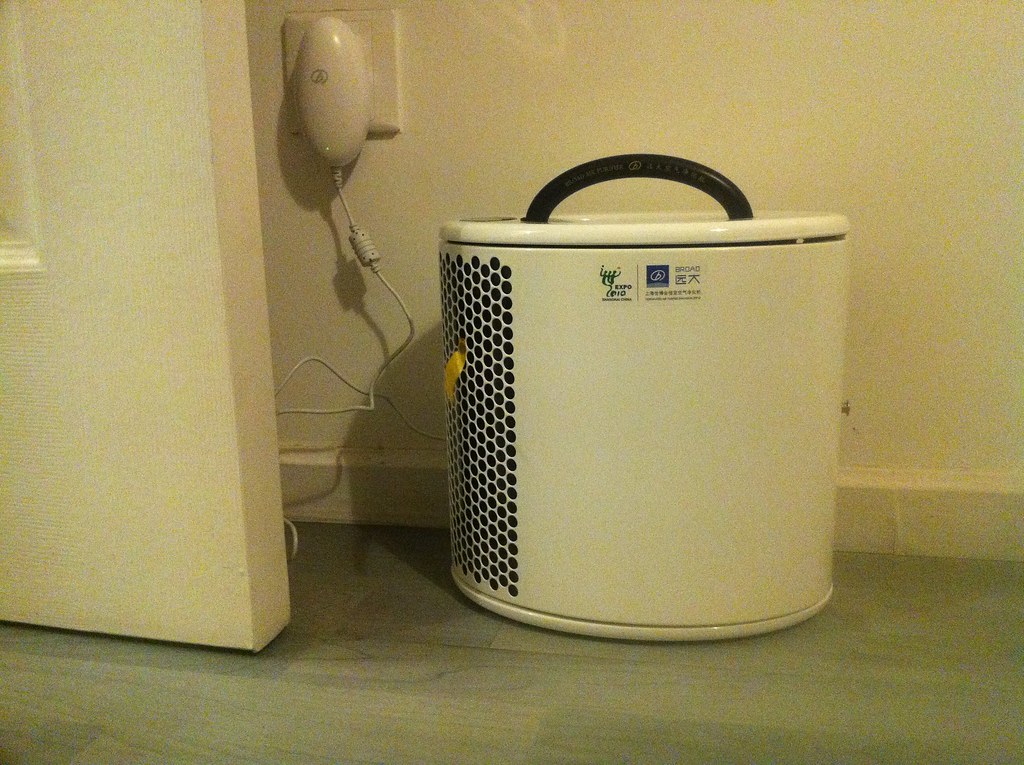
Portable air purifiers are more useful when fighting air pollutants. A quality unit with a true HEPA filter captures particles at 0.3 microns at 99.97 percent efficiency, meaningfully reducing fine and near-ultrafine concentrations in the room where it’s running. The problem here though is air circulation, these systems can struggle to fully clear the air in one room since they can’t access the unfiltered air lingering far away from its air inlet/intake.
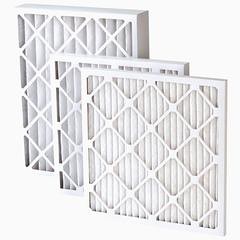
Filtering the air throughout your home is a great approach. So is improving the HVAC filter you buy. Standard 1-inch HVAC filters do very little for fine or ultrafine particles. MERV (Minimum Efficiency Reporting Value) ratings below 8 catch dust, lint, and hair. They’re mainly there to protect the equipment, not your lungs. Upgrading to MERV 13 or higher helps with PM2.5 capture. Please note, high-MERV filters create airflow resistance that can strain your HVAC system if they’re not properly matched.
Whole-home air purification: What it does and where it fits
Whole-home electronic air cleaners like Trane’s CleanEffects work differently from media filters. An electrostatic field charges incoming particles (e.g. pollution), which are then attracted to oppositely charged collection cells and trapped there. This filter causes no airflow restriction and the cells are washable. No more replacement filters.
CleanEffects spec sheet says that it captures particles down to 0.1 microns at up to 99.98% efficiency. It plucks everything from COVID to soot out of the air.
Howver, UFPs are defined as particles below 0.1 microns, so they fall below the system’s capture threshold. No residential, whole-home air cleaner currently handles that size range reliably. And at that size, the approach to clearing the air is a different beast.
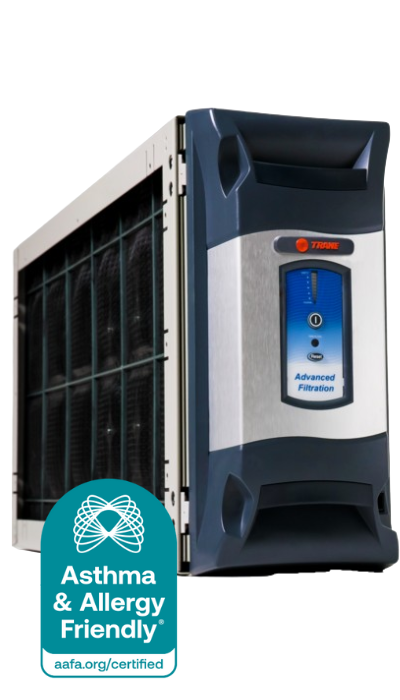
What CleanEffects does address is the broader category of fine and near-ultrafine particles (i.e. PM2.5, mold spores, bacteria, pet dander, pollen, smoke, and the larger end of the UFP spectrum). It cleans all of conditioned air in the house, continuously, through every heating and cooling cycle. A very different scope than a portable room unit.
The more useful way to think about it is in terms of stacking your defenses. No single measure eliminates UFP exposure entirely. But combining a whole-home filtration system with a few other practices can reduce indoor exposure substantially:
- A whole-home electronic air cleaner handles the air your HVAC system is already circulating, continuously, and across the entire house.
- Keeping windows closed during high-traffic hours. Do this during the morning and evening rush, and when wind is carrying emissions from industrial or airport sources toward your neighbourhood. You’ll be reducing outdoor UFPs from mixing into your indoor air.
- A portable HEPA unit in a bedroom provides an additional layer during the hours when you’re staying in a single space for long periods of time.
- Reduce indoor combustion sources: gas stoves without range hood ventilation, candles, wood-burning fireplaces, etc. Try to remove significant sources of UFPs that originate inside the home.
- Ensuring your HVAC system is well-maintained and not leaking air through unsealed ductwork to reduce unfiltered infiltration from unconditioned spaces like attics and crawlspaces.
Together, these measures can substantially reduce the cumulative indoor exposure. But this doesn’t reduce the risk of UFPs enough, more must be done by government and industry to make significant improvements to the local air we breathe.
Where to start
If you’re in Hamilton, Stoney Creek, or the Niagara region and want to take indoor air quality seriously, the first practical step is knowing what your current HVAC system is and isn’t doing for you. Most residential systems are running a basic 1-inch filter and doing nothing about fine particles getting into the home.
If you want a whole-home solution, that’s a conversation worth having with an HVAC contractor who can assess your system and tell you what it can actually support. A Plus Air Systems has designed indoor air quality systems throughout Toronto, Hamilton, and Niagara regions for 30 years (and counting!). If you’d like to know whether your current HVAC setup is serving your needs, we’re happy to take a look.
Call us at 905-643-1799 (Hamilton/Niagara) or 416-213-0303 (Toronto/GTA), or reach out through aplusair.com.
Sources
1. Weichenthal et al. (2024). Long-Term Exposure to Outdoor Ultrafine Particles and Black Carbon and Effects on Mortality in Montreal and Toronto, Canada. Health Effects Institute Research Report 217.
→ pmc.ncbi.nlm.nih.gov/articles/PMC11480997/
2. CBC News (Sept. 27, 2024). Tiny and unregulated, ultrafine particles have the potential to cause major health problems.
→ cbc.ca/newsinteractives/features/ultrafine-particles
3. CBC News (Aug. 7, 2024). Study suggests ultrafine particles linked to 1,100 deaths per year in Montreal and Toronto.
→ cbc.ca/news/canada/montreal/ultrafine-particles-mcgill-study-1.7288101
4. CBC News / Hamilton (July 14, 2023). Breathing the air in parts of Hamilton is like smoking a cigarette a day, researcher says.
→ cbc.ca/news/canada/hamilton/air-quality-hamilton-1.6904964
5. Batisse et al. (2025). Examining the social distributions in neighbourhood black carbon and ultrafine particles in Montreal and Toronto. Environment International.
→ pubmed.ncbi.nlm.nih.gov/40132442/
6. Hudda et al. (2018). Aviation-Related Impacts on Ultrafine Particle Number Concentrations Outside and Inside Residences near an Airport. Environmental Science & Technology.
→ pmc.ncbi.nlm.nih.gov/articles/PMC5822220/
7. Sabaliauskas et al. (2015). Development of a land-use regression model for ultrafine particles in Toronto. Atmospheric Environment.
→ sciencedirect.com/science/article/abs/pii/S1352231015001892
8. Budaniya & Rai (2022). Effectiveness of plants for passive removal of particulate matter is low in the indoor environment. Building and Environment.
→ sciencedirect.com/science/article/abs/pii/S0360132322006175
9. NASA Clean Air Study (1989). Summary via Wikipedia.
→ en.wikipedia.org/wiki/NASA_Clean_Air_Study
10. Ontario Ministry of the Environment (2023). Understanding the Components of PM2.5: A Focus on Hamilton.
→ ontario.ca/document/air-quality-ontario-2023-report/understanding-components-pm25-focus-hamilton
11. Clean Air Hamilton. Air Quality Trends.
→ cleanairhamilton.ca/air-quality-trends/
12. Trane Technologies. CleanEffects® Whole Home Air Cleaner — product specifications.
→ trane.com/residential/en/products/indoor-air-quality/air-purification/cleaneffects/